Decisions, decisions: The problem with portals
The endless options, continual advances in software, and rapid changes in the business landscape make portal implementation complex.
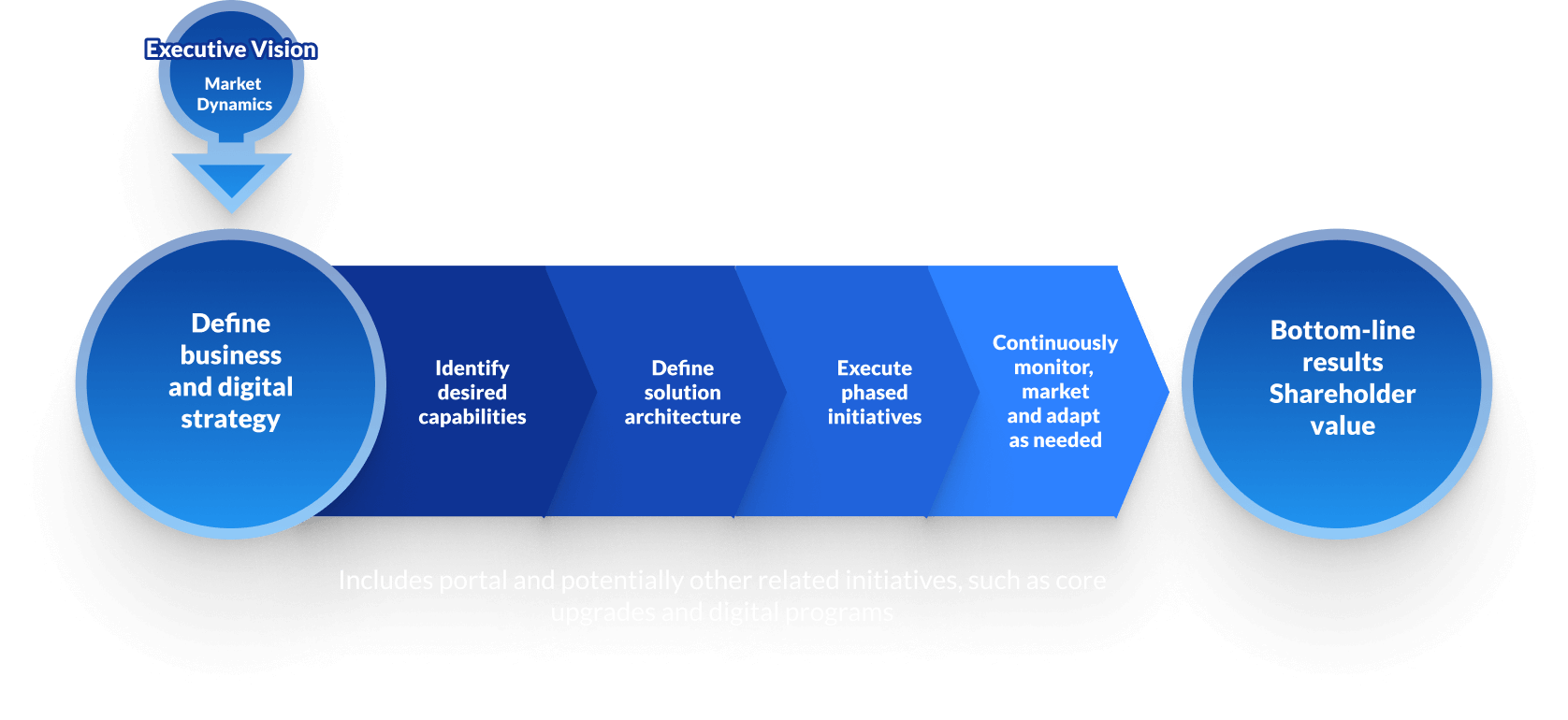
Carriers need an integrated strategy and a clear focus on client needs to develop portals that deliver a unique brand experience and drive growth.
We’ve seen many companies stumble into common mistakes.
These include:
• “One size fits all”: Some carriers don’t consider the specific needs of respective user communities, or personas when building portals. The personas could be policyholders, agents, or employees. When carriers try to serve several personas equally with their portals, carriers run the risk of serving none of them well.
• Technology for the sake of technology: When carriers fast track their portal development to a particular technology solution, they miss the opportunity to truly differentiate themselves by focusing on competencies that complement their business models.
• Failing to optimize the timing of portal rollouts: Portals are closely integrated with core systems and, therefore, the timing of the initial portal implementation—as well as subsequent updates—must be carefully sequenced against other core system upgrades.
Focus on capabilities
Your portal should help you achieve your business goals in the digital domain.
Once you understand how to use your portal to define your brand and support your business objectives, it will become clearer how to select and implement a portal solution from the many options available. Our approach outlines three steps:
• Step 1: Use a capabilities-driven approach to help you tailor the portal for your most critical user communities. Identify the capabilities and experience differentiators a portal solution can provide for different users.
• Step 2: Evaluate portal solution options: Identify what’s at stake by analyzing growth objectives and the competitive landscape. The answer to this question helps inform decisions about how much to spend and how quickly you need to implement a new portal.
• Step 3: Balance expected business benefits, costs, and risks when planning the timing of the implementation. When making this decision, consider how you’ve prioritized client and operational needs against cost and technical constraints, as well as the desire to minimize rework and maintain a positive user experience throughout the change.